
Introduction
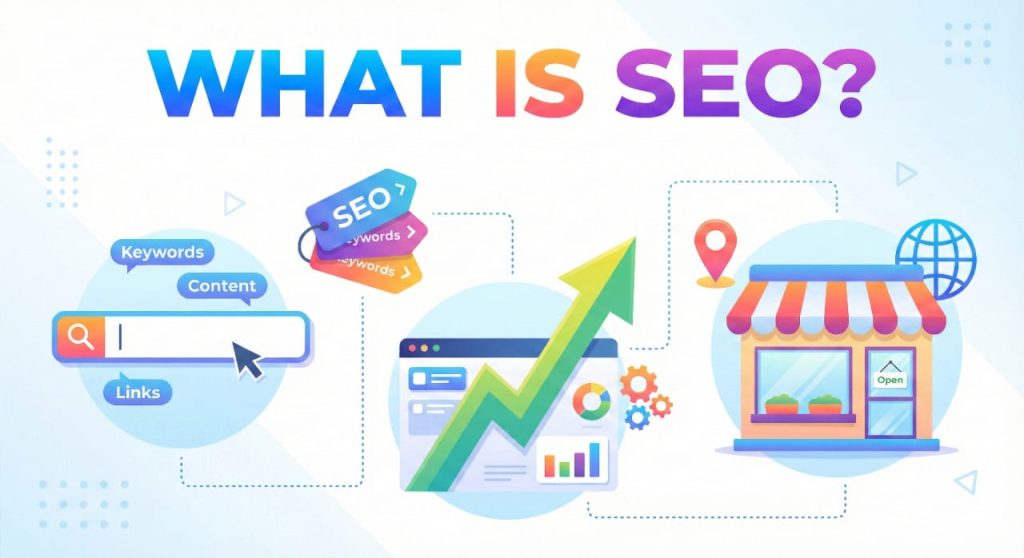
In the digital-first era, customers are using search engines to learn about products, services, and brands. This is why understanding What Is SEO has become essential for small businesses. Google is where people usually search for lists of bakeries, salons, doctors, and other local service providers. This is the reason why a robust internet presence has become a necessity for every small business. Search Engine Optimisation (SEO) will ensure you become more visible, find more customers, and gain brand credibility in the long run. Knowing What Is SEO helps businesses attract the right audience. In contrast to paid advertising, SEO is concentrated on creating natural traffic, i.e., it is assumed that people discover your website by themselves in the process of the relevant search. This brings in the same visitors without the constant spending of money. SEO is one of the most effective and low-cost marketing tools that can be adopted by small businesses that have a limited budget. It is possible to achieve a higher position, get quality leads, and compete with bigger companies even without the experience of the work of SEO and using the correct methods. This guide explains What Is SEO and how small businesses can apply it in 2025.
What Is SEO (Search Engine Optimization) ?
To understand What Is SEO, it is important to know how websites appear on Google. The process of enhancing a website in order to rank high in search engine rankings in a manner that the site shows itself when people seek related products or services is known as SEO (Search Engine Optimization). SEO aims at achieving higher levels of organic (non-paid) traffic through relevancy, trustworthiness, and ease of use on the site. Search engines such as Google use hundreds of ranking variables, such as content, keywords, site structure, mobile, backlinks, and user experience, to rank websites. Proper optimisation of a site makes the search engine become more aware of the purpose of a particular site and rank it accordingly. This is the core idea behind What Is SEO for small businesses. This allows the businesses to tap the potential customers at the point of their search for solutions. In contrast, unlike advertising, SEO can give long-term results and operate continuously as long as the site is updated and optimised. Simply put, What Is SEO means helping search engines trust your site, rank it higher, and attract more visitors.
Why SEO Matters for Small Businesses in 2025
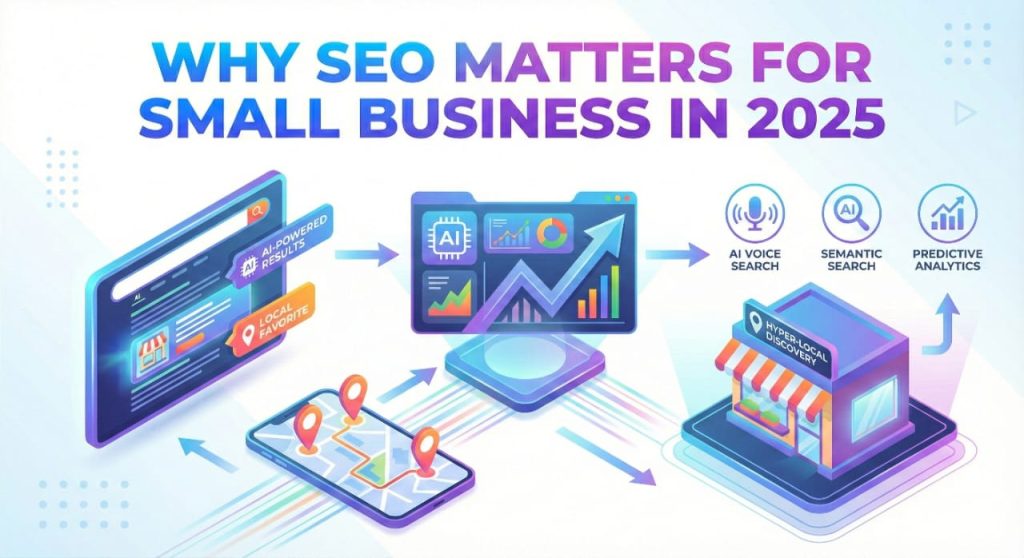
Understanding What Is SEO gives small businesses a huge advantage. SEO is becoming more significant to small businesses, particularly in 2025, due to the ongoing increase in digital competition. Googling results are more credible and have greater visibility compared to any kind of advertising, and that is why SEO is necessary when it comes to getting credibility and being seen. Small companies usually have small budgets and are not able to depend on constant paid advertising. SEO suggests a long-term, sustainable approach to bring customers in without additional expenditure per click. As the number of individuals who use mobile phones to find local services increases, being at the top of the results of a location-based search will enable businesses to receive instant attention and traffic.
The algorithms of Google have also gotten wiser and focus on websites that bring true value, a good user experience, and content. This provides small businesses with a chance of competing with the larger brands just by maximising their presence online. SEO is efficient in improving the performance of websites, increasing the speed of their loading, increasing the mobile functionality, and also promoting the development of trust by reviewing and providing quality content. Small businesses that invest in SEO will be at an advantage, attract the right people in 2025, and have a strong digital presence, whose size will gradually increase over the years.
How Search Engines Work
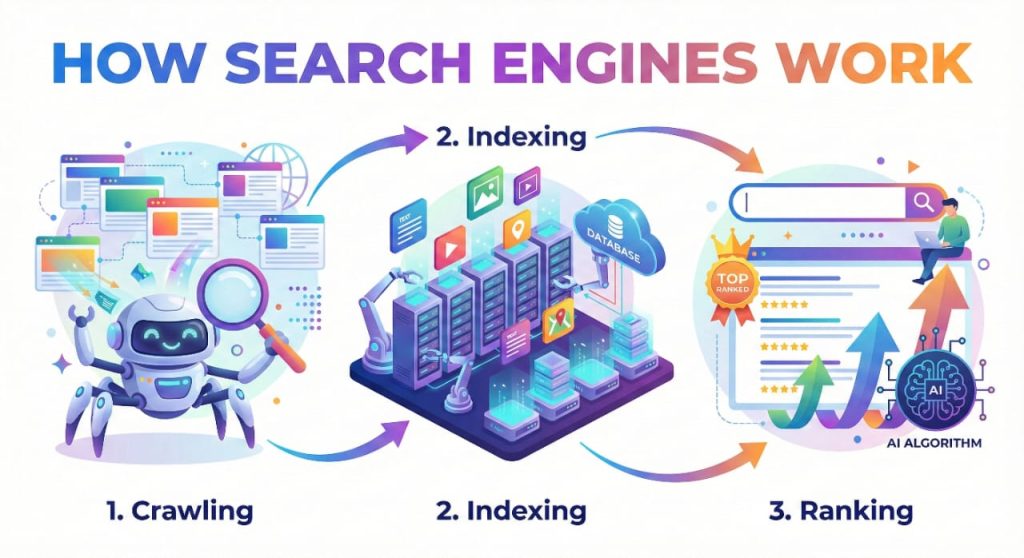
Google and other search engines have a systematic order of operation to provide the most appropriate results to the users. This is achieved through three major steps, namely crawling, indexing, and ranking. Crawling refers to a process where search engine bots are used to search the internet in order to identify new and new web pages. After discovering the pages, they proceed to indexing, where Google gathers the content of each page, its structure, as well as its intent, and stores the data in its enormous database.
Ranking is the last process, and here Google decides which pages to display at the top of those that have been searched. The ranking is done according to various factors, which include relevancy, freshness, quality of content, use of keywords, backlinks, security, and user experience. The algorithms used in Google consider these factors in order to deliver the best and most useful results to the user. Knowing the functioning of the search engines can enable small businesses to optimize their websites so as to have a better chance of making it on the first page. This knowledge is essential for anyone learning What Is SEO.
Types of SEO
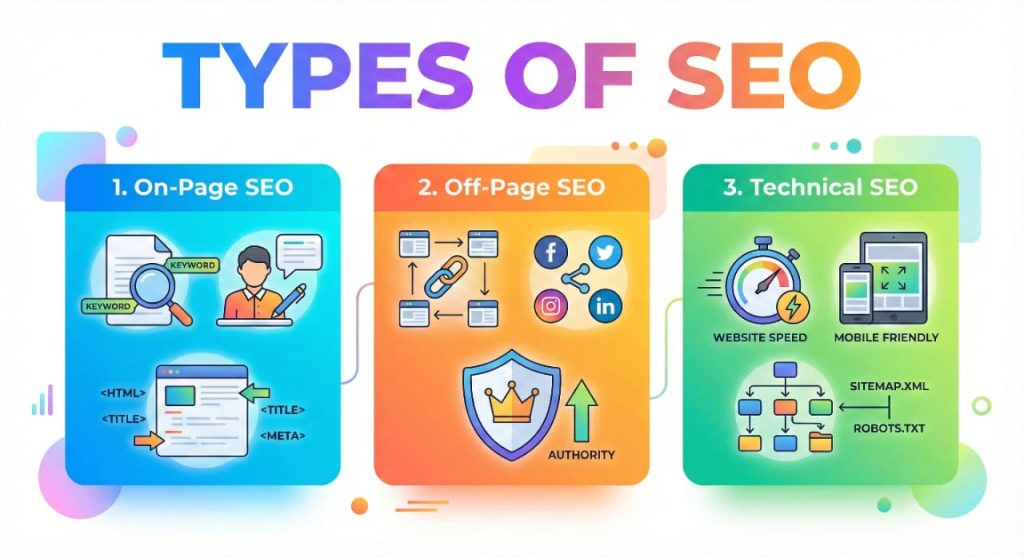
SEO is categorized into three major types, namely On-Page SEO, Off-Page SEO, and Technical SEO. Anyone trying to understand What Is SEO must learn these three types. The types have a specific contribution to the performance of the websites, their visibility, and ranking.
On-Page SEO deals with the aspect of your website that is under your direct control. This involves optimisation of content, keywords, headings, URL, images, and internal links. The idea behind this is to ensure that your website is even more comprehensible to the search engines and more useful to the users. On-page SEO is important because it makes sure that your content fits search intent and has clear and organised information.
Off-Page SEO is the kind of activity that is performed outside the webpage to enhance authority, reputation, and trust. This primarily comprises other websites ‘ backlinks, social signals, guest blogging, influencer mentions, reviews, and brand awareness. The external signals are seen as votes of confidence by the search engines. The more credible the sites that are associated with your site, the greater your authority. This authority is a key part of What Is SEO and rankings.
Technical SEO is a process that makes your site easy to crawl, index as well and understand by search engines. It involves speeding up the site, being beingmobile-friendlyy, sitemaps, site structure, site security (HTTPS), and also repairing such technical problems as 404 errors. The best content will not rank without good technical SEO.
The three of them, On-Page, Off-Page, and Technical SEO, need to be combined to realise optimisation. Great content and poor technical performance of a site will not help it, whereas one that is technically correct but lacks backlinks might not have authority. Knowledge of all the types of SEO will assist in making a balanced and effective strategy.
a. On-Page SEO
On-Page SEO involves the optimization of pages to make them more search engine-friendly and also user-friendly. This begins with the incorporation of applicable keywords naturally all throughout the content, particularly, titles, headings, meta descriptions, and the first paragraph. On-page SEO also involves structuring the content in terms of clear headings, short paragraphs, bullet points and images to be read.
Good on-page performance requires proper URL structure, internal linking, optimised image alt text, and good quality of long form content. It is aimed at giving useful information in an informative way, which will answer questions of the users in a clear way and make the search engine know what the page is all about. On-page SEO when performed right, enhances ranking and interaction with the user. On-page optimization is the foundation of What Is SEO.
b.Off-Page SEO
Off-Page SEO encompasses all the activities outside your site that helps in enhancing ranking and authority. Backlinks -links to your website from other sites are the most important part. The good quality of backlinks with well-known sites indicates to Google that your material is reliable and valuable. Social media engagement, influencer partnerships, business directory listing, guest blogging, and customer reviews are also considered as off-page
These are absent activities that create brand reputation and enhanced exposure on several platforms. The more people discuss or repost your materials, the higher authority you build online, and the higher your pages will be rated. Off-page optimization is also required to build the credibility and demonstrate to search engines that your site should be ranked at the top. Backlinks explain a major part of What Is SEO and online authority.
c.Technical SEO
Technical SEO is done to make sure that the search engines can crawl, index, and interpret your website. It dwells upon optimising the backend factors like the speed of the website, its mobile friendliness, the security of the HTTPS mechanism, clean code, XML sitemaps, robots.txt, and structured data. The optimised website is technically optimised, faster, and provides improved user experience, in addition to avoiding such problems as duplicate information, broken links, and slow load times.
Google gives more importance to websites that are compatible with devices, more so, mobile phones. Technical SEO is also associated with correcting the problems of indexation, the enhancement of Core Web Vitals, and developing o rational structure of the site that is easy to navigate. Even good content can not rank without proper technical SEO, since the search engines will not be able to access the pages and process them accordingly. Technical strength also defines What Is SEO in Google’s perspective.
How to Build an Effective SEO Strategy
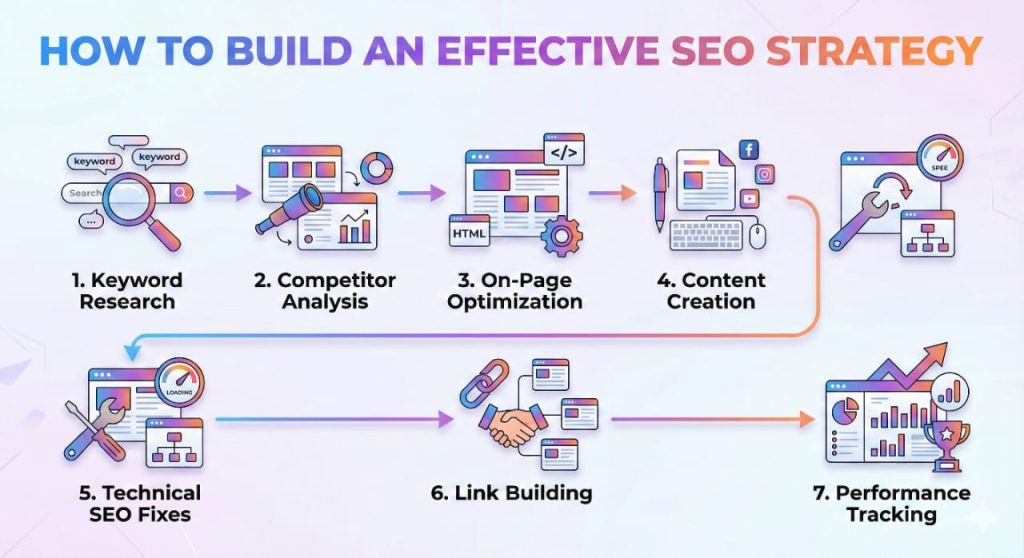
To apply What Is SEO effectively, a strong strategy is needed. The development of a powerful SEO strategy is based on a number of steps that help to enhance visibility and find the right customers. The initial one is the keyword research- finding words that are being searched by the target audience. Select long, low competition, and user intent keywords. Then, research rivalry to know which keywords and content strategies work successfully.
Subsequently, streamline your web design through the establishment of clean URLs, coherent browsing, and properly structured categories. Creation of content is the core of SEO and thus keep on publishing good, informative, and original contents frequently. Every content must appeal to a problem or a need of your customers. Then, ensure the optimization of on-page details such as titles, meta descriptions, headings, and images to be optimized through search engines.
Next should be technical SEO, which focuses on making sure that your site loads fast, is mobile responsive, and does not have any bugs. After a good foundation, you should begin to generate backlinks by way of a guest post, collaboration and local directory listing. Track rankings and traffic with the help of such tools as Google Analytics and Search Console and refresh old content to make it relevant.
Constant and continuous improvement, patience, and consistency are key to having a successful SEO strategy, yet the results will increase with time. This step-by-step approach helps beginners master What Is SEO.
On-Page SEO: Detailed Checklist
- Use relevant keywords naturally.
- Optimize title tag and meta description
- Use only one H1 tag per page.
- Add H2 and H3 headings for structure
- Write long, valuable conten.t
- Optimize URLs with keywor.ds
- Add internal links to related pa.ges
- Use optimized images with alt text
- Improve readability with bullet po.ints
- Ensure mobile-friendly formatting
Off-Page SEO: Detailed Checklist
- Build high-quality backlinks
- Submit guest blog posts.
- Join industry forums and communities
- Get customer reviews on Google.
- Stay active on social media.
- Participate in local listing sites
- Collaborate with influencers or bloggers
- Get brand mentions on trusted websites
- Share content regularly
- Maintain consistent NAP (Name, Address, Phone) across listings
Technical SEO: Detailed Checklist
- Improve website loading speed
- Use HTTPS for security
- Ensure mobile responsiveness
- Submit XML sitemap to Google
- Fix 404 errors and broken links
- Optimize Core Web Vitals
- Use robots.txt correctly
- Add structured data (schema markup)
- Eliminate duplicate content
- Maintain a clean, logical website structure
Common SEO Mistakes Small Businesses Should Avoid
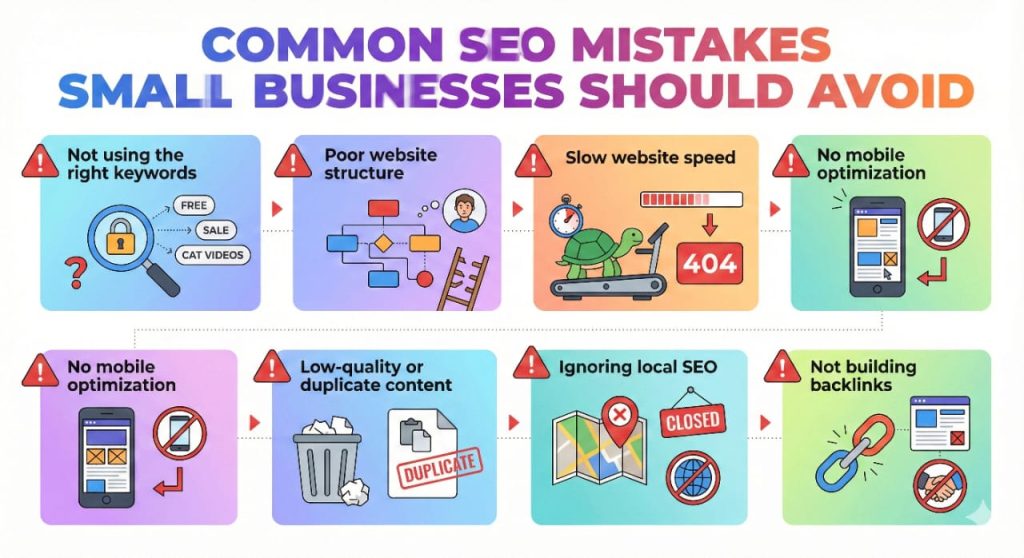
Most mistakes happen due to not understanding What Is SEO correctly. Among small businesses, there is a tendency to make several errors that will have a negative effect on their search engine optimization. These are key word stuffing, poor mobile optimization, printing of low content or duplicate content, ignoring mobile optimization and poor backlinks. Some companies just do not refresh the old pages or keep track of the errors on the web pages and this has an impact on ranking. There are also poor user experience, slow loading time, and a lack of meta description, which are problematic. The dismissal of local SEO (including an optimization of Google Business Profile) is a guarantee of loss of potential customers in the area. These are some of the mistakes which can be avoided to achieve good traffic and ranking.
Best SEO Tools for Beginners
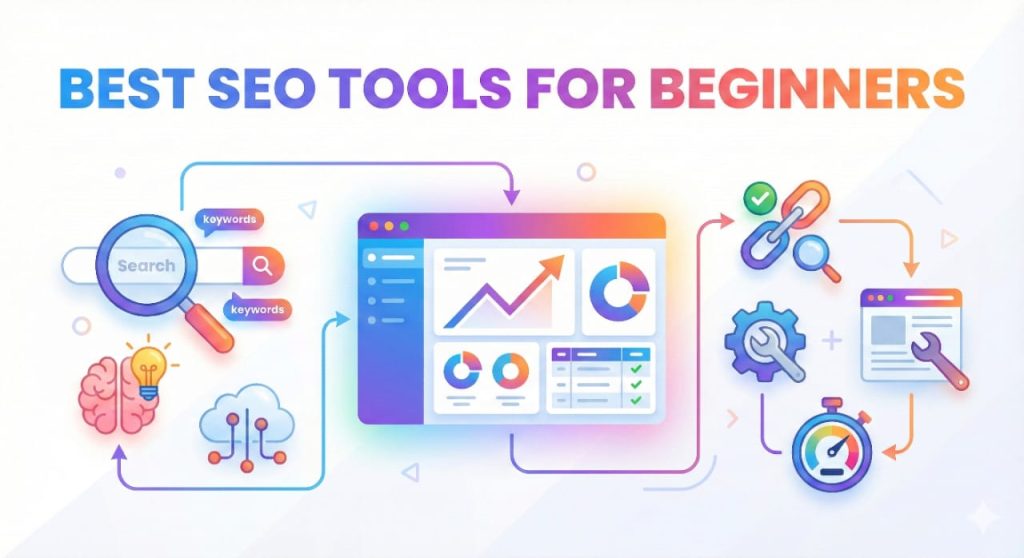
Novices can employ several tools to make SEO easier. The performance can be traced with the help of Google Analytics and Google Search Console, and the issues identified. Google Keyword Planner and Ubersuggest can help with researching keywords. SEMrush, Ahrefs and Moz provide in-depth competitor, backlink and keyword difficulty information. Screaming Frog iappliesto technical auditing of SEO. Rank Math and Yoast SEO are the tools that assist in the optimisation of the on-page factors. These are tools that facilitate the process of SEO, and they are more accurate and effective with small businesses. These tools make learning What Is SEO much easier for beginners.
Google’s EEAT & Helpful Content Update (2025)
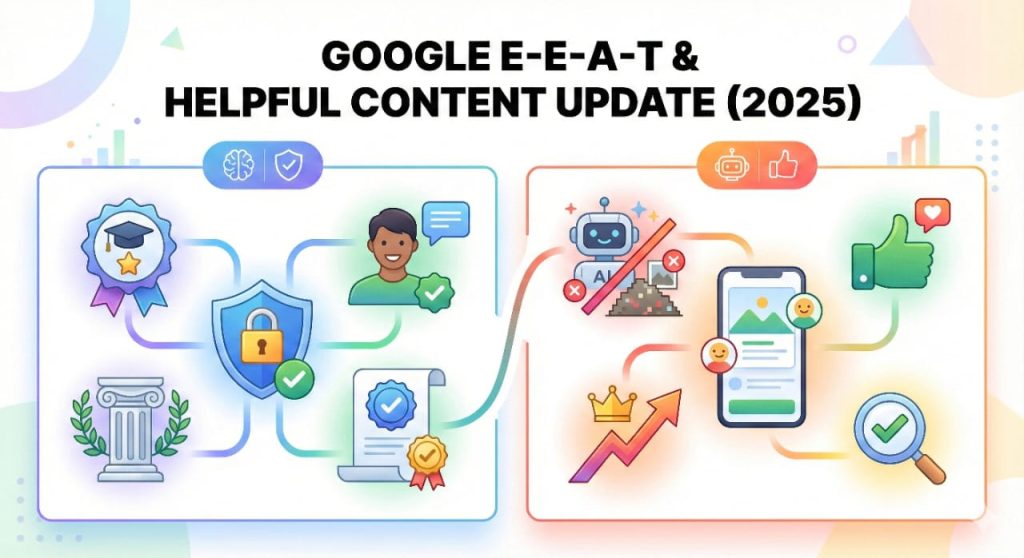
The EEAT guidelines used by Google, Experience, Expertise, Authoritativeness, and Trustworthiness, have a significant contribution to rankings. These guidelines impact how Google evaluates What Is SEO practices. Google in 2025 will focus on the content created by verified professionals who have experience in practice. Websites should be credible with precise, useful and in-depth content. Helpful Content Update algorithm rewards pages that actually address the problem of the user and de-rewards thin or artificial intelligence-generated content and misleading content. Inclusion of author biographies, referencing credible references, using HTTPS, and attaining credible backlinks contribute to the enhancement of EEAT and ranking in general.
Conclusion
Understanding What Is SEO helps small businesses grow consistently. SEO is one of the most formidable instruments in digital marketing for a small business in 2025. It enhances online visibility, attracts targeted customers, and builds long-term credibility, all without dependence on costly advertising. This will enable small businesses to compete with other bigger brands, especially if they know how search engines work and improve on-page elements, do technical SEO, create value with content, and build strong backlinks. SEO requires patience, consistency, and continuous improvement. However, the results it shows are very long-lasting and effective. When implemented correctly, SEO will drive organic traffic, increase conversions, and strengthen brand presence. For any small business aiming for sustainable growth, understanding What Is SEO is not just helpful — it is essential for long-term success.
Frequently Asked Question
1. How long does SEO take?
SEO typically takes 3–6 months for noticeable results.
2. Can small businesses do SEO themselves?
Yes, with basic knowledge and consistency.
3. Are backlinks still important?
Yes, high-quality backlinks remain a top ranking factor.
4. Is SEO better than paid ads?
SEO gives long-term results; ads stop when payment stops.
5. How often should content be updated?
At least every 3–4 months for best performance.
